Content Team
AI technology experts specializing in face swap research and digital content creation.
Photo face swap technology has become the cornerstone of modern creators' economy, providing unprecedented flexibility for filmmakers and social media influencers. With the digital platform turning to short format, high impact video content, the ability to accurately manipulate visual identity has been transferred from the high budget Hollywood studio directly to independent creators. In the competitive pattern of online video production, speed and visual participation are crucial. Using AI driven tools is no longer a luxury, but a strategic necessity. This transformation is not only about novelty; It's about efficiency, cost reduction and the democratization of film expression. By using platforms such as faceswap-ai.io, creators can now bypass traditional corner selection barriers and post production bottlenecks to achieve a more flexible and creative workflow to meet the needs of global audiences.
The journey of identity manipulation in media has transited from the basic "cut and paste" technology to the complex, neural network driven photo face swap application we see today. The core of the technology is to use deep learning, especially the generation of GAN, to analyze the geometry, lighting and texture of the source face, and map it seamlessly and accurately to the target image. For creators engaged in online short film production, it means that they can create a consistent role model in various scenes, without the presence of actors in every shot. When creators use high-quality image intensifiers and face swap tools, the result is a professional level visual effect, which not only maintains the integrity of the original cinematography, but also introduces a new narrative possibility.
In addition to simple replacement, integrating these tools into the creative pipeline also led to the rise of "virtual actors". These are digital roles that can be maintained in multiple episodes or series, ensuring brand consistency in a way that previously could not be achieved with low budget production. The evolution of video face swap further expands this function, allowing static exchange to move naturally in the 4K environment. This technological leap allows:
Rapid Prototyping: Testing different "looks" for a protagonist before committing to a full production schedule.
Historical Accuracy: Seamlessly placing a modern actor’s face into archival or period-accurate photography to create flashbacks or historical context.
Resource Management: Reducing the need for expensive reshoots by fixing minor facial expression errors or makeup mishaps in post-production.
As the underlying algorithm becomes more efficient, the entry threshold is also falling. Now, single creators can use the video background remover to isolate a role, and then apply the exchange to effectively create a high-end drama scene in their home office. This integration of AI tools defines the current era of "intelligent production". In this era, the quality of output is only limited by the imagination of creators, not their technical budget.
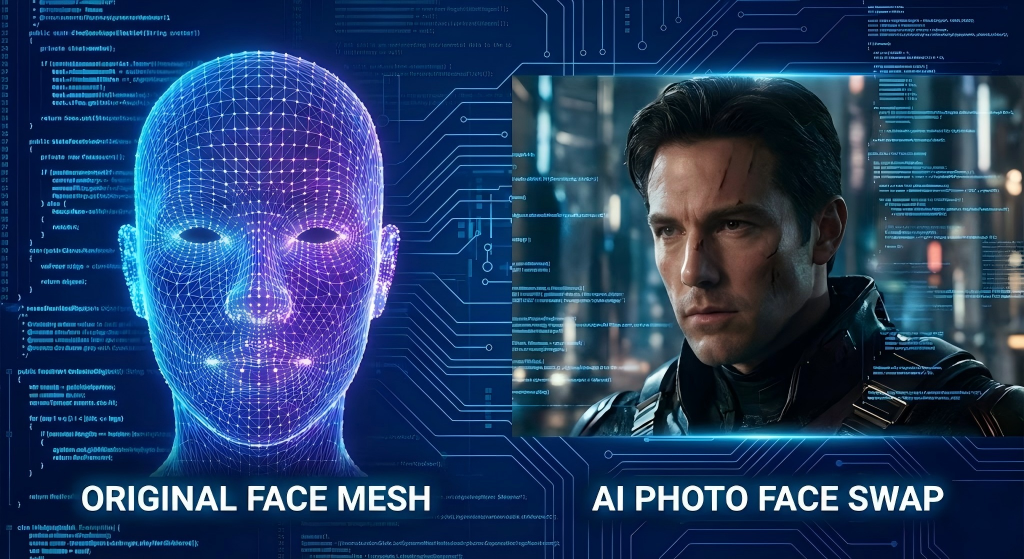
The phenomenon of "short plays" (or micro plays) has raised a storm on the Internet, characterized by fast-paced plots and high emotional bets in 60 seconds. In this high-pressure environment, online video production needs tools that can keep up with the daily upload progress. This is where faceswap-ai.io becomes an important asset. By using the video face swap workflow, the production company can choose a talented performer based on their body performance and body language, and "exchange" a more "marketable" or more suitable for the specific role of the script. This strategy is particularly effective for international localized content. In this case, the production may hope to better resonate with the local audience by exchanging the facial features of the protagonist, so as to adapt a successful TV play to different people.
In addition, the economic impact of these AI tools cannot be underestimated. Traditional film production involves a large number of talents, logistics and hair / make-up costs. By strategically using the facial expression changer, the director can take a picture and modify the actor's Micro expression - turning the neutral expression into subtle sadness or brewing anger - without needing a second shot. This level of control is revolutionary. When used in combination with a video upgrader, even shots taken on a mid-range mobile device can be transformed into a movie experience comparable to that of TV broadcasting.
Consider the following workflow improvements:
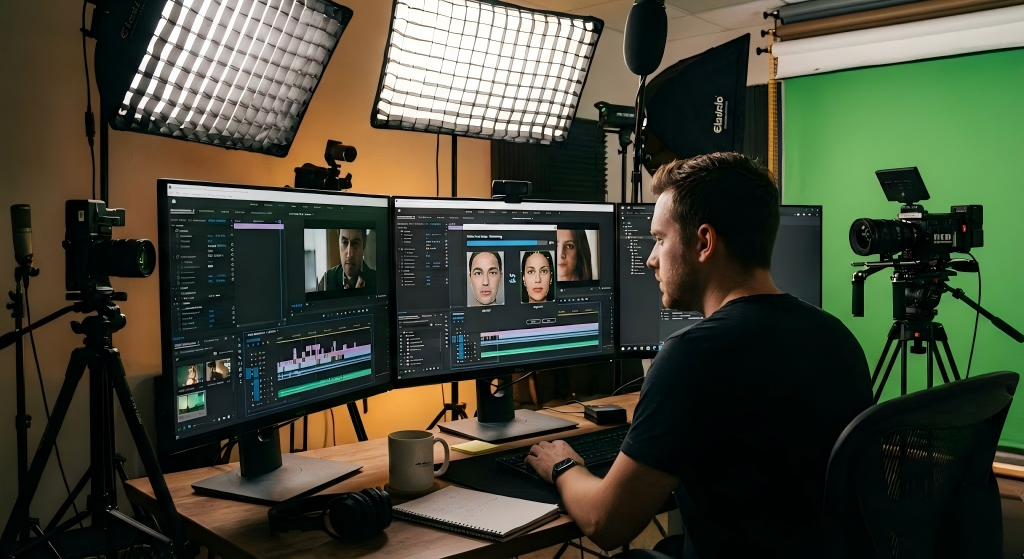
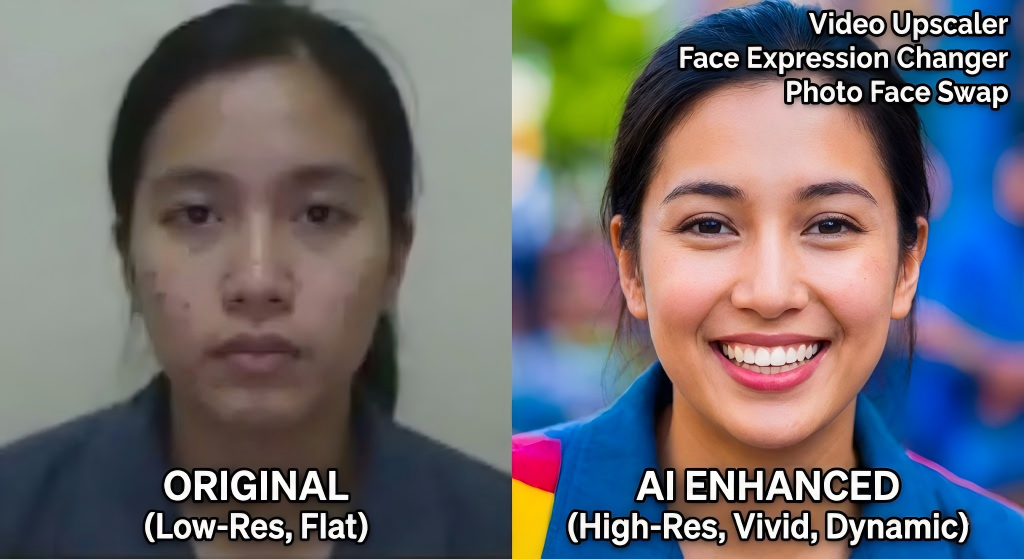
One of the biggest challenges in the production of online short films is to maintain the visual consistency of hundreds of short films. If the character's expression fluctuates, the audience will lose the sense of immersion. The advanced photo face swap technology solves this problem by providing a "gold standard" face template, which can be applied to various lighting conditions and angles. In order to ensure this high level of fidelity, professional creators usually use video scalers to improve the resolution of the source material, ensuring that each pore and eyelash is rendered correctly during the exchange process. This attention to detail is the difference between viral click and amateur content.
The use of facial expression converters adds another layer of depth to character development. In short plays, emotions are often exaggerated to make up for the limited running time. AI allows creators to fine tune these emotions in post production. For example, a scene may require the character to show a smile when crying. If the actors can't fully achieve this goal, AI can bridge the gap. In addition, the integration of lip sync technology ensures that when the face is exchanged, even if the audio is recorded separately or dubbed into different languages, the mouth action can be perfectly aligned with the dialogue.
To achieve peak visual quality, creators should follow these best practices:
High-Resolution Sources: Always start with the highest quality images possible; using an image enhancer on your source face can prevent blurring during the transition.
Background Harmony: Use a video background remover or watermark remover to clean up the frame before applying AI effects, ensuring there are no visual distractions that break the illusion.
Color Grading: After the swap, perform a final pass of color grading to unify the skin tones of the swapped face with the lighting of the original scene.
The faceswap-ai.io platform provides a set of tools to help achieve this level of detail. By providing all services from video character replacement to background cleaning, it provides a one-stop service for digital creators. As the audience becomes more and more sophisticated, yesterday's "fake" is being replaced by tomorrow's "digital stand in" - photo level lifelike, emotional resonance, and can't be distinguished from reality.
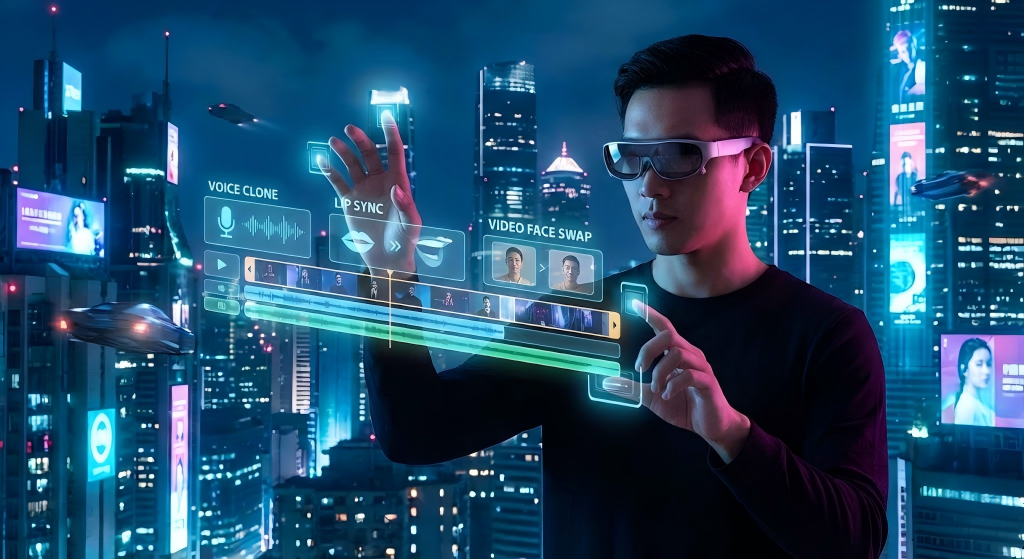
When we look to the future of online video production, the integration of visual and auditory AI is the next frontier. When photo face swap processes visual recognition, technologies such as voice cloning and lip synchronization are completing the sensory experience. Imagine that a creator can make a complete short TV play, and the hero speaks ten different languages fluently, while maintaining their original voice and perfect mouth synchronization. It's not science fiction; This is the current trajectory of AI development. The ability to perform video character replacement on a large scale means that intellectual property rights (IP) can be transplanted across cultures with minimum friction.
The ethical use of these tools is also a key topic. As we move further into the "Deepfake" era, transparency and consent remain crucial. Platforms such as faceswap-ai.io are at the forefront of encouraging responsible use, providing innovative tools for creators, while respecting the rights of individuals who use portraits. In the field of short plays, it is usually in the form of authorized digital doubles or the creation of fully synthetic "Ai influencers", which do not exist in the real world.
Key future trends to watch include:
Finally, the goal of these technologies is to reduce the "failure cost" of creators. In the past, bad shooting or wrong casting could destroy a work. Now, with the help of video intensifiers and a set of facial operation tools, every error is an opportunity to be fixed. Driven by the democratization of high-end visual effects and the unremitting innovation of AI developers, the pattern of online video production will continue to expand. Whether you are an experienced filmmaker or amateur, there are now tools to turn your most ambitious vision into a digital reality.
Expert Review: This article was written by Koby Allen, our editorial team.
Methodology: All product comparisons and reviews are based on hands-on testing and independent research. We may earn affiliate commissions (at no extra cost to you) from some links.
Last Updated: December 25, 2025