Content Team
AI technology experts specializing in face swap research and digital content creation.
The rise of AI face swap technology has fundamentally changed the digital landscape, from a quirky social media trend to a powerful tool for professional content creators. Although many people associate this concept with simple mobile applications, the underlying architecture of photo face swap has become the cornerstone of high-end visual effects (VFX) and modern film production. By using complex neural networks and deep learning algorithms, creators can now manipulate their visual identities with the precision previously reserved for studios with millions of dollars. This evolution is not just about changing a face; It's about expanding the boundaries of human expression and narrative flexibility.
When we study the intersection of AI and cinematography, it is obvious that tools such as photo face swap are bridging the gap between imagination and reality. This paper discusses the profound impact of this technology on the film industry, the technical nuances that make it possible, and how platforms such as faceswap-ai.io popularize these professional functions for independent film producers and digital artists. Whether it's to make a legendary actor old for flashback sequences or to seamlessly replace the image of stunt doubles, these applications are as broad as the history of the film itself.
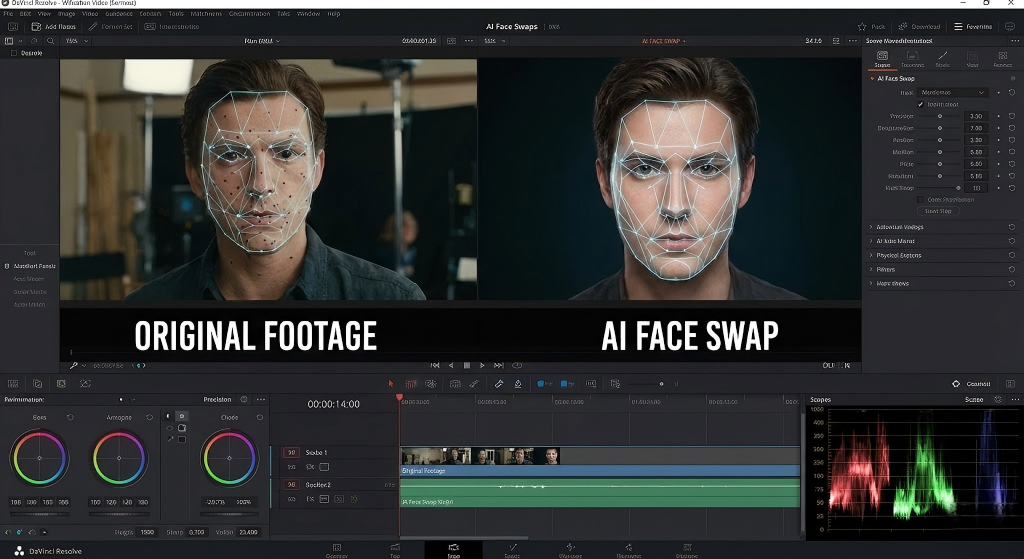
Traditionally, the process of changing an actor's appearance in post production is a labor-intensive work, known as "digital make-up" or "head replacement.". At the beginning of the twenty-first Century, it required expensive motion capture suits, hundreds of tracking marks and frame by frame rendering by elite visual effects companies for months. However, the emergence of photo face swap technology supported by GANs greatly simplifies this workflow. AI can now analyze thousands of data points from a single high-resolution source image and map features to the target video instead of manually carving 3D models. This transformation makes it possible to achieve the result of super reality in a short period of time.
For filmmakers, the main advantage is the consistency of details. When using the image enhancer to prepare the source material, AI can maintain the skin texture at the pore level and complex lighting interaction, even the most skilled digital artists are difficult to manually copy. This is particularly important in the "horror Valley" - in this psychological decline, the humanoid image looks "not quite right", enough to make people feel uneasy. AI driven exchanges bypass this by using real human data rather than synthetic representation.
By integrating these tools into pre-viz, the director can also see potential changes in the cast or performance adjustments before shooting a single frame on the set. The main benefits include:
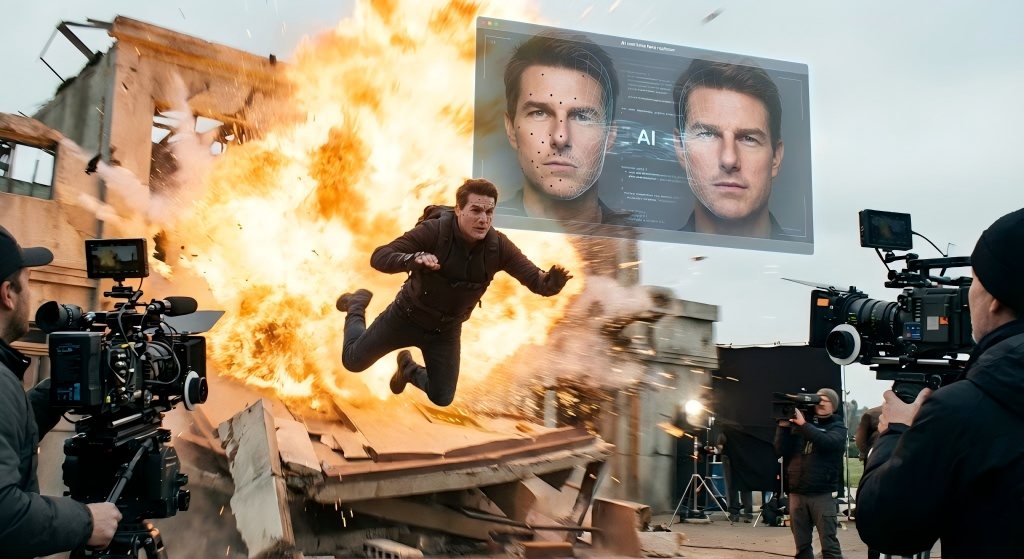
In the high-energy world of action movies, the safety of the leading role is crucial, leading to a large number of stunt doubles. Historically, directors had to hide the face of the stand in through clever camera angles, quick editing or "wig shooting.". Now, video face swap technology allows wide and clear shots of high-risk stunts, and the protagonist's face is perfectly integrated into the stunt actor's body. This creates a more immersive experience for the audience, because the camera no longer needs to avoid action.
The process involves using various lighting conditions to capture the high fidelity "face set" of the protagonist. When shooting stunts, AI will analyze the actions of the stunt, and replace the head or face with the portrait of the main character, maintaining the physical characteristics of the action and environmental lighting. In addition, using the video intensifier in the final rendering process can ensure that the exchanged face matches the texture, noise and motion blur of the original shot. This synergy between AI and traditional cinematography enables modern blockbusters to maintain a seamless visual flow.
In addition to stunts, this technology is changing "de aging" completely. We've seen iconic actors return to their 20 year old self in the main series. It's not just a stunt; It's a narrative tool that allows non-linear narration, without the need for young "look alike" actors, who may not be able to capture the subtle differences of the original performers. By using the extensive library of actors' past works, the photo face swap algorithm can "learn" to define specific micro expressions of actors' styles.
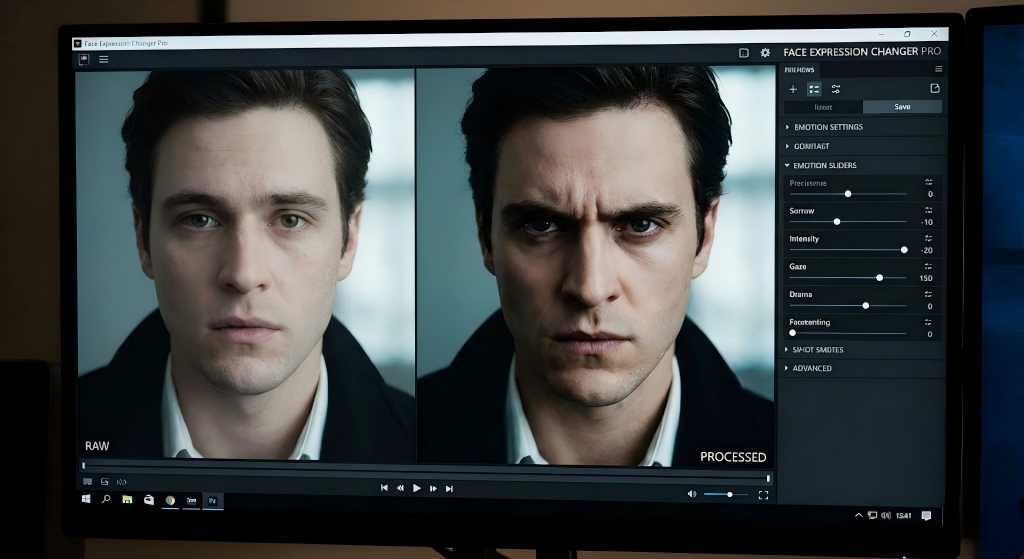
Sometimes, a perfect shot will be destroyed by a mismatched expression or a blink at the wrong time. In the past, it meant expensive re shooting or suboptimal performance. Now, the facial expression changer, a subset of facial exchange technology, allows the editor to fine tune the emotional output of the performance. If the actors don't look "surprised" enough, or their eyes are slightly off camera, AI can subtly adjust these features without changing the face structure.
This level of control is the game changer of dramatic stories. Platforms like faceswap-ai.io provide tools that allow creators to manipulate these micro expressions with surgical precision. For example, the director can extract the eye performance from take 1, extract the mouth action from take 4, and use the photo face swap logic to integrate them into a "super shooting". It's not about changing actors; This is to enlarge their best works.
In addition, the technology stack usually includes a video background remover or a watermark remover, which is used to clean up frames before the final facial synthesis occurs. This ensures that AI only focuses on face data, and will not be disturbed by background confusion or technical artifacts. The result is a clean, professional output that meets the 4K or even 8K projection standard.
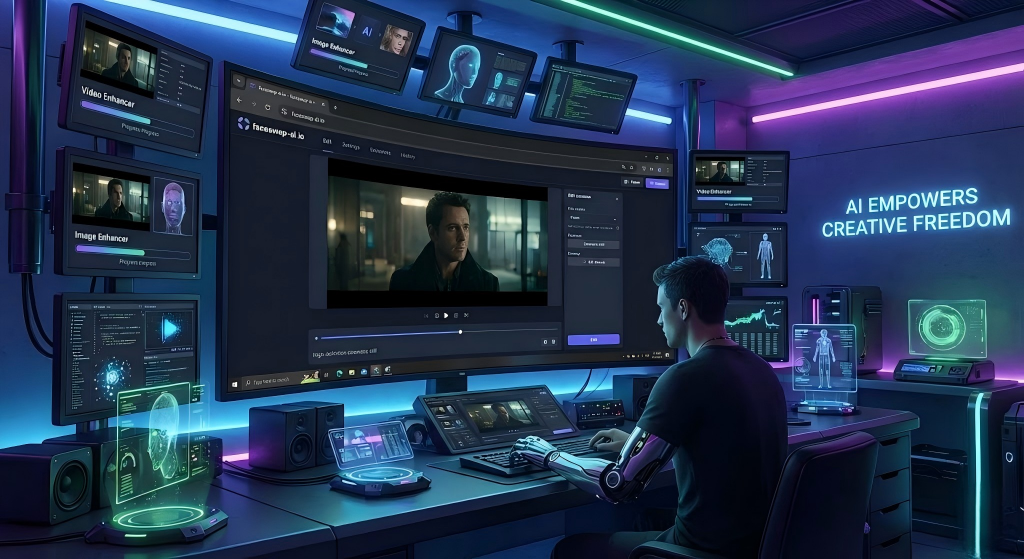
Looking forward to the future, the democratization of photo face swap technology may be the most important influence. High quality visual effects are no longer limited to the back of the walls of the main studio. Independent creators, YouTube users and small production companies can now use tools that were unimaginable ten years ago. By visiting faceswap-ai.io, users can access a set of AI driven utilities designed to enhance their visual content. From the simple photo face swap of creative posters to the complex video face swap sequence of short films, the power is now in the hands of individuals.
The next frontier involves integration of high-resolution upgrades. The combination of video intensifier or video scaler and face swap can ensure that the final product not only looks realistic, but also looks like a movie. We also saw the rise of "virtual actors", that is, the portraits of performers are allowed to be used in multiple projects at the same time, or "digital resurrection", allowing the late legendary figures to contribute to modern films with the consent of their heritage.
However, with the powerful power, the demand for moral responsibility also follows. The industry is currently developing a "digital watermark" standard to ensure that the content generated or changed by AI is transparently marked. In faceswap-ai.io, the focus is still on enhancing creativity, while providing necessary tools, such as image intensifiers, to maintain the highest quality standards. The future of film is not just what we see on the screen; This is about how this technology allows us to tell stories that we couldn't shoot before.
Expert Review: This article was written by Alex Carter, our editorial team.
Methodology: All product comparisons and reviews are based on hands-on testing and independent research. We may earn affiliate commissions (at no extra cost to you) from some links.
Last Updated: December 25, 2025